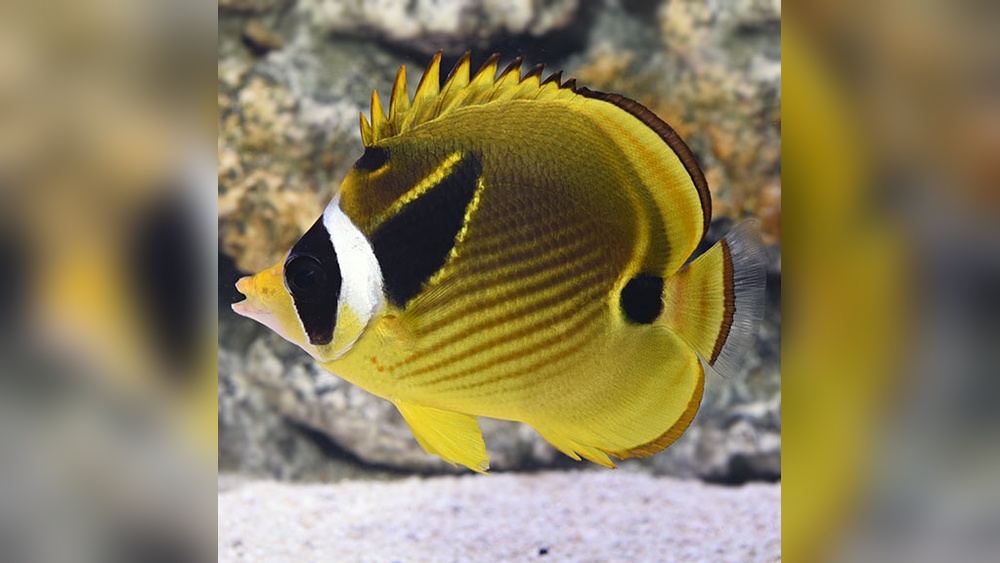
The Raccoon Butterflyfish is a beautiful fish. Many people want to keep it in their saltwater aquariums. But this fish needs special care. This guide will help you learn how to care for it well.
About the Raccoon Butterflyfish
The Raccoon Butterflyfish is a colorful fish. It has black, white, and yellow marks on its body. Its name comes from a mask-like pattern near its eyes. It lives in warm oceans, mostly in the Indo-Pacific area. This fish is active and likes to swim a lot.
Tank Requirements
To keep a Raccoon Butterflyfish happy, you need a good tank setup. Here are the basics:
- Tank size: At least 50 gallons (190 liters).
- Water temperature: 72 to 78°F (22 to 26°C).
- Salinity: Specific gravity 1.020 to 1.025.
- pH level: Between 8.1 and 8.4.
- Oxygen: Water must be well oxygenated.
- Filtration: Use an efficient filter system.
This fish needs clean and stable water conditions. Change the water often. Use a water test kit to check quality.
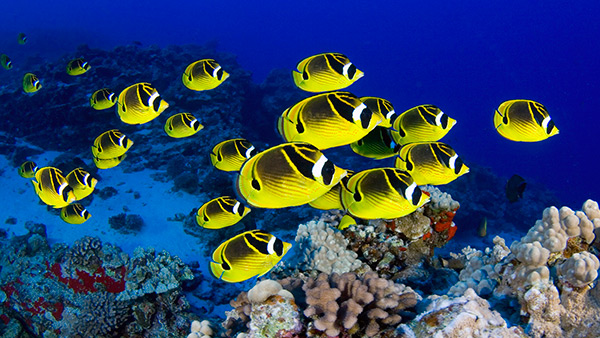
Credit: reefbuilders.com
Tank Setup Tips
Give this fish space to swim. It is active and needs room. Also, provide hiding places. Rocks and coral decorations work well. These give shelter and make the fish feel safe.
Do not add too many fish in the tank. Raccoon Butterflyfish can be shy at first. They like calm and peaceful tanks.
Diet and Feeding
The Raccoon Butterflyfish is an omnivore. It eats many things in the wild. Here is what it eats:
| Food Type | Examples |
|---|---|
| Soft-bodied invertebrates | Sea anemones, nudibranchs, worms |
| Small benthic crustaceans | Shrimp, small crabs |
| Coral polyps | Parts of coral |
| Algae | Various marine algae |
In the aquarium, feed a mix of foods:
- Frozen foods: Mysis shrimp, brine shrimp, chopped meat.
- Flakes and pellets: High-quality marine flakes and pellets.
- Live foods: Live brine shrimp or bloodworms to encourage eating.
- Algae: Nori sheets or other types of seaweed.
Feed small amounts twice a day. This fish is mostly active at night. But it can learn to eat during the day. Watch how much it eats. Remove leftover food to keep water clean.
Behavior and Compatibility
The Raccoon Butterflyfish is gentle but shy. It swims around the tank a lot. It can be curious but may hide if scared.
It is not safe for all reef tanks. This fish may bite corals and other small animals. It eats pest anemones like aiptasia. This can be good for pest control.
Do not keep it with very aggressive fish. Also, avoid very small fish that it might bother. Good tank mates are peaceful fish that swim in mid to top levels.
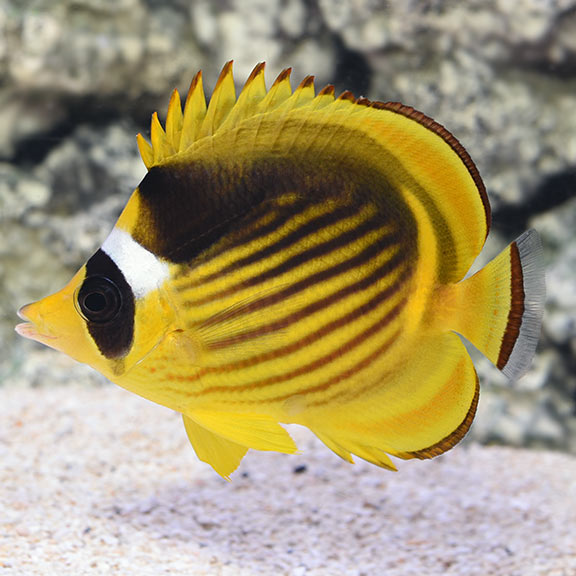
Credit: www.liveaquaria.com
Health and Common Issues
Keeping water clean is very important. Poor water can cause diseases. Watch for signs of illness:
- Loss of color
- Not eating
- Breathing fast
- White spots on body
- Clamped fins
If you see these signs, check water quality first. If needed, treat with medicine made for marine fish. Quarantine new fish before adding them to the tank.
Special Tips for Success
- Use a tank with plenty of hiding spots.
- Keep water oxygenated and clean.
- Feed a varied diet with meaty and plant foods.
- Feed slowly and remove extra food.
- Keep water temperature and pH stable.
- Watch fish behavior daily.
Summary Table: Raccoon Butterflyfish Care
| Care Aspect | Details |
|---|---|
| Tank Size | Minimum 50 gallons (190 liters) |
| Water Temperature | 72-78°F (22-26°C) |
| Salinity | Specific gravity 1.020-1.025 |
| pH Level | 8.1 – 8.4 |
| Diet | Frozen shrimp, flakes, algae, live foods |
| Behavior | Shy, active, not reef safe |
| Tank Mates | Peaceful, mid to top swimmers |
| Special Needs | Stable water, hiding spots, oxygenated water |
Final Thoughts
The Raccoon Butterflyfish is a lovely fish for saltwater tanks. It needs care and patience. Keep water clean and stable. Feed it a good diet. Provide space and hiding places. Watch its behavior and health.
If you follow these steps, your Raccoon Butterflyfish can live happily in your home aquarium. It will add color and life to your tank. Enjoy watching this unique fish swim and explore.
Frequently Asked Questions
How Do You Take Care Of A Raccoon Butterfly Fish?
Provide a spacious, well-filtered tank with stable, oxygen-rich water. Feed a varied diet of marine flakes, frozen shrimp, and algae. Ensure hiding spots and monitor for coral nipping, as they are not fully reef-safe. Maintain consistent water quality and avoid sudden changes for healthy raccoon butterflyfish care.
What Do Raccoon Butterflyfish Eat?
Raccoon butterflyfish eat sea anemones, nudibranchs, worms, coral polyps, algae, and small crustaceans. In captivity, feed them marine flakes, pellets, frozen shrimp, and live foods. They also consume pest anemones like aiptasia, making them helpful in reef tanks.
What Size Tank Does A Raccoon Butterfly Need?
A raccoon butterflyfish needs a minimum 75-gallon tank for ample swimming space and stable water conditions. Provide efficient filtration and oxygenation.
What Is The Lifespan Of A Raccoon Butterflyfish?
The raccoon butterflyfish typically lives 5 to 8 years in captivity with proper care. Maintaining stable water conditions extends its lifespan.
What Is The Ideal Tank Size For Raccoon Butterflyfish?
A 50-gallon tank or larger provides enough space for swimming and hiding.
How Often Should I Feed Raccoon Butterflyfish?
Feed small amounts twice a day, offering varied foods for balanced nutrition.
What Water Conditions Suit Raccoon Butterflyfish Best?
Maintain stable temperature (72-78°F), pH 8. 1-8. 4, and high oxygen levels.
Can Raccoon Butterflyfish Live With Other Fish?
Yes, they are peaceful but avoid aggressive or very small tank mates.